
How it works
How Glute AI builds your personalized glute workouts
Glute AI is a personalized glute-training app for women. It turns four things you tell it into a lower-body strength-training plan, then keeps that plan moving with progressive overload and progress tracking. Here is what happens between opening the app and your first session.
Start with four inputs
Your goal
Glute AI is glute-focused by design. Whether you want stronger glutes, fuller glutes or better lower-body strength overall, the goal decides which movements lead each phase and how the volume is split between the gluteus maximus and the side glutes.
Your experience
Beginner, intermediate or advanced changes where loads and volume start. A first-time lifter is not handed an advanced split; someone who already hip thrusts is not sent back to bodyweight bridges.
Your equipment
A full gym opens up machines like the hip thrust machine, leg press and cable station. A smaller setup with dumbbells or bands still gets a real glute plan, built from movements that work with what you have.
Your schedule
Tell it how often you can train. A typical phase runs a few sessions a week with rest days built in, because recovery is part of muscle growth, not a gap in the plan.
Every session is written before you get there
Open the Today tab and the session is already set: its name, how many working sets, which exercises, and the next target for the main lift. There is nothing to decide at the gym.
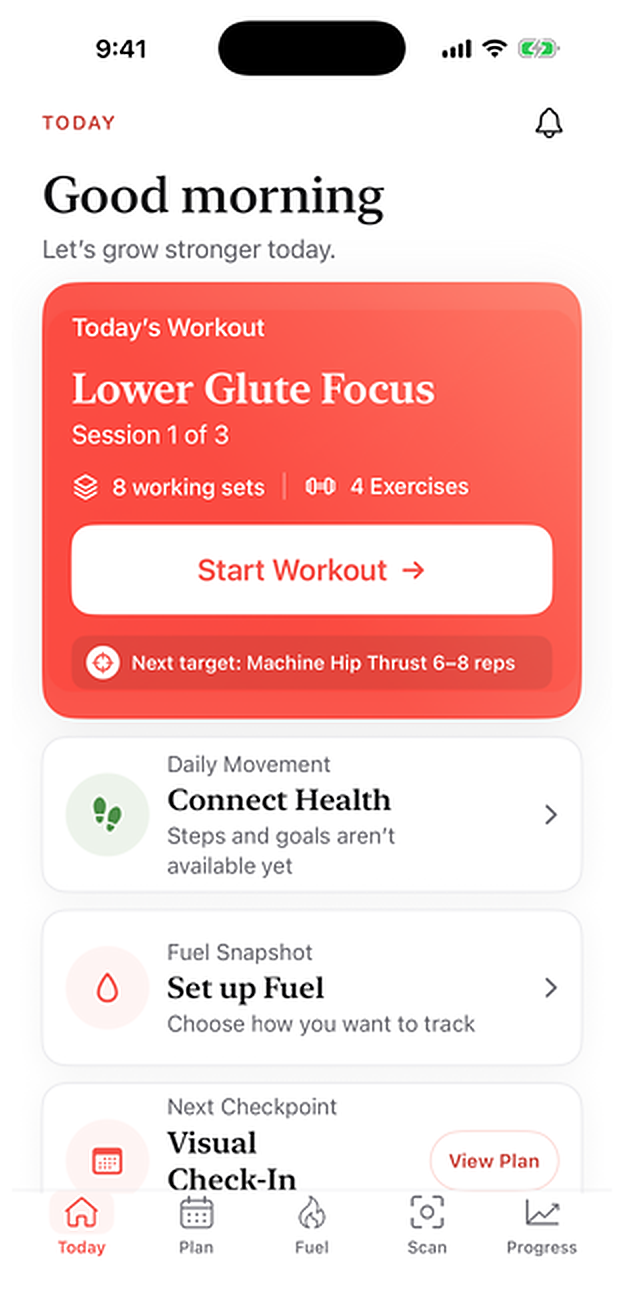
A lower-glute session, for example, might combine a machine hip thrust, a 45-degree leg press, a standing cable abduction and a dumbbell Romanian deadlift, each with its own sets and rep range. The exercise library Glute AI draws from covers thrusts and bridges, hinges, single-leg work, squats and abductions.
Progression instead of repetition
This is the part most glute programs skip. Each main exercise carries a working-set target, such as Machine Hip Thrust for 6 to 8 reps at a given load. Hit it, and the next session asks for a little more: more reps in the range, or more weight. Miss it, and the plan holds until you are ready. That is progressive overload, the mechanism behind muscle hypertrophy, applied without you having to track it in your head.
Fuel that fits around training
The Fuel tab tracks calories, protein, carbs and fat for the day, with meal scanning and saved meals so logging takes seconds. Protein stays front and center because building muscle asks for it. Nutrition supports the training; it never replaces it.
Progress you can see
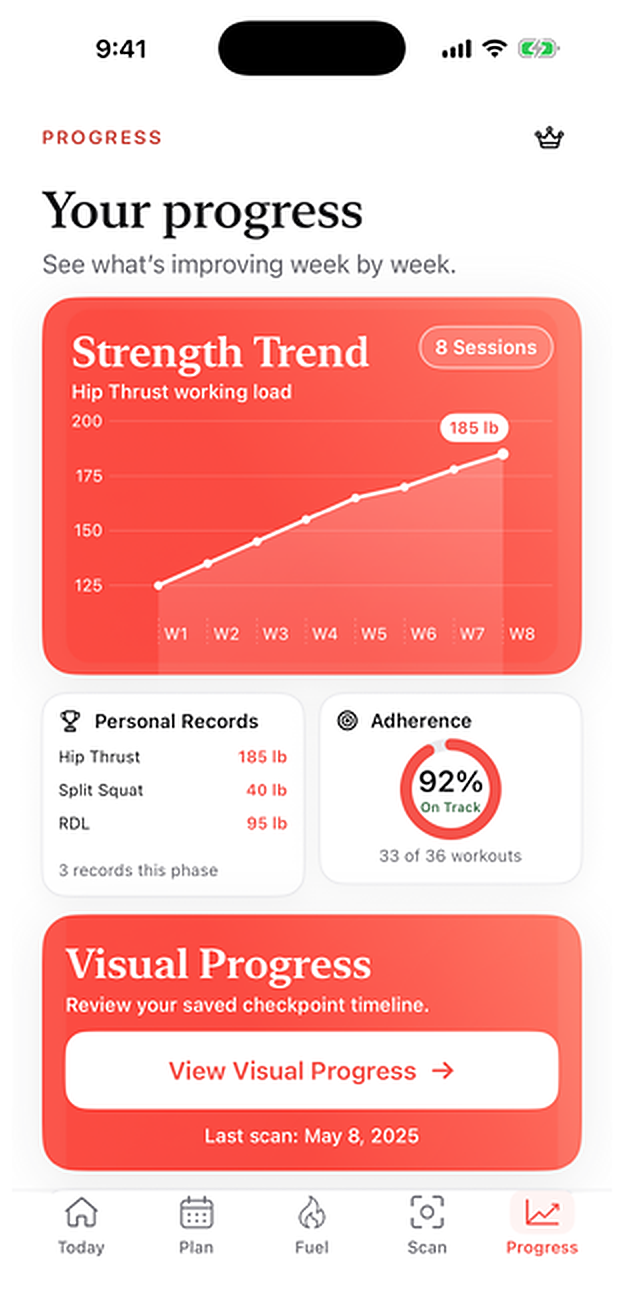
The Progress tab charts your strength trend, keeps your personal records and shows adherence across the phase. Checkpoint body scans are compared to your own first week, never to anyone else, and stay private. Consistency finally has somewhere to show up.
Gym or a smaller setup
Because the plan is built from your equipment, the same system works for a full commercial gym, a home gym with a barbell and bench, or a corner of an apartment with dumbbells and resistance bands. Change your equipment and the plan changes with you.